

An electric vehicle charging channel lets you charge your electric car at home even if you don’t have a driveway or garage.
Your charging cable sits inside a shallow groove in the pavement. This groove has a lid that protects the cable and helps stop people tripping over it or damaging it.
Installing an electric vehicle charging channel does not guarantee you a parking space. You may also need to apply for planning permission. Planning permission guidance for electric vehicle chargers
Eligibility
To be eligible for an electric vehicle charging channel:
- You cannot have off-street parking available at your property.
- Pavement parking must not be common in your area, this could block access to the channel.
- You’ll need a qualified electrician approved by the Office for Zero Emission Vehicles to install your chargepoint. This is not included in the work we carry out to install your cross-pavement channel. Find an approved installer
- The pavement outside your property should ideally be between 1.4m and 3m wide.
How much it costs
We work out the cost to install your channel depending on the details you provide when you apply.
There may be extra costs if anything, like a lamppost, needs moving to install your channel or if your pavement is too wide or too narrow.
How to apply
You can apply online.
Apply for an electric vehicle charging channel
How we install a channel
We install all channels ourselves.
To install a channel we:
- Cut a narrow trench in the pavement between your home and the road.
- Place a metal or plastic channel with a lid inside the trench.
- Fill in any gaps with material and leave it to set.
The installation usually takes about 3 hours.
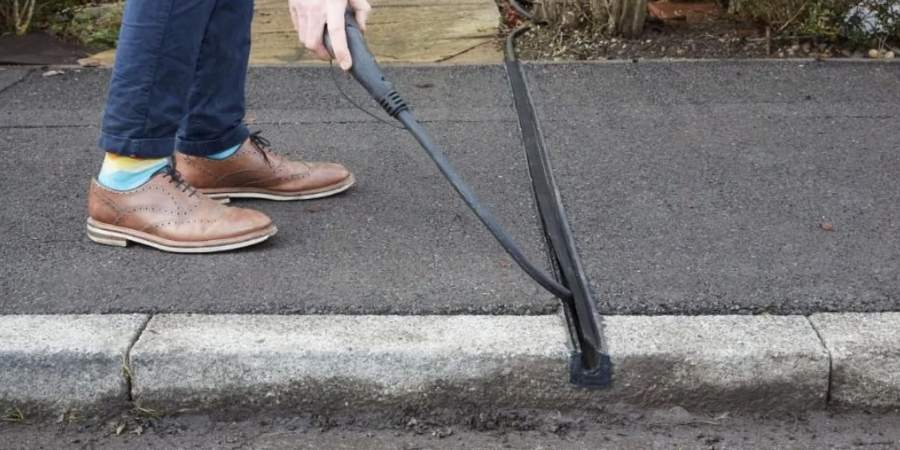
An example of an electric vehicle charging channel being used.
Your responsibilities when using your charging channel
Once we install your channel, it is your responsibility to:
- Let your Electricity Network Operator know after your charger is installed. Find your Electricity Network Operator
- Make sure your charging cable is fully inside the channel and the lid sits flat with the pavement before, during and after charging.
- Make sure no part of the cable should be loose on the pavement or road.
- Use cable clips or retainers to secure any cable running up a wall or over a step.
- Remove the cable from the channel when it’s not connected to a vehicle.
- Regularly check the channel and clear out leaves, stones or other debris.
Your car insurance should cover any accidents or damage caused to or by your charger or your cable. Check with your insurance provider.